Physical Address
304 North Cardinal St.
Dorchester Center, MA 02124
Physical Address
304 North Cardinal St.
Dorchester Center, MA 02124

Plan your Lima trip with this local's guide. Best places to visit, where to eat, safety tips, and practical advice for first-time visitors to Lima, Peru.
Most travellers treat Lima as a layover — a night in a hotel near the airport before catching a flight to Cusco. That is a mistake. I have lived in Lima full-time for several years, and this city has more to offer than most visitors realise. This Lima travel guide covers the best places to visit, where to eat, how to stay safe, how to get around, and the practical details you need to plan your trip properly.
Lima is a city of about 10 million people stretched along a desert coastline. It is noisy, sprawling, and chaotic — and it is also one of the best food cities on the planet, home to pre-Inca ruins older than anything in Cusco, and built along dramatic Pacific cliffs that most travellers never expect.
The food scene alone justifies spending two or three days here. You can eat ceviche prepared an hour after the fish was landed, try Japanese-Peruvian fusion food that exists nowhere else, and sit down to a ten-course tasting menu at a restaurant consistently ranked among the world’s best — all in the same weekend.
Beyond food, Lima has a colonial Historic Centre with grand plazas and ornate churches, bohemian neighbourhoods with street art, and a coastline where paragliders drift over surfers on grey Pacific waves.
What surprised me most when I first arrived was how different the neighbourhoods feel. Miraflores could be a district in any well-maintained Latin American capital. Barranco feels like a small coastal art town. The Historic Centre has the faded grandeur of a former seat of Spanish colonial power. Ten minutes separates these places, but they feel like different cities.
The biggest mistake travellers make is skipping Lima entirely. I understand the impulse — you have limited time, Cusco and Machu Picchu are the draw, and Lima’s reputation is not glamorous. But flying straight to Cusco from an international flight means arriving at 3,400 metres altitude with no acclimatisation. Spending two days in Lima first, at sea level, is not just enjoyable — it is practical.
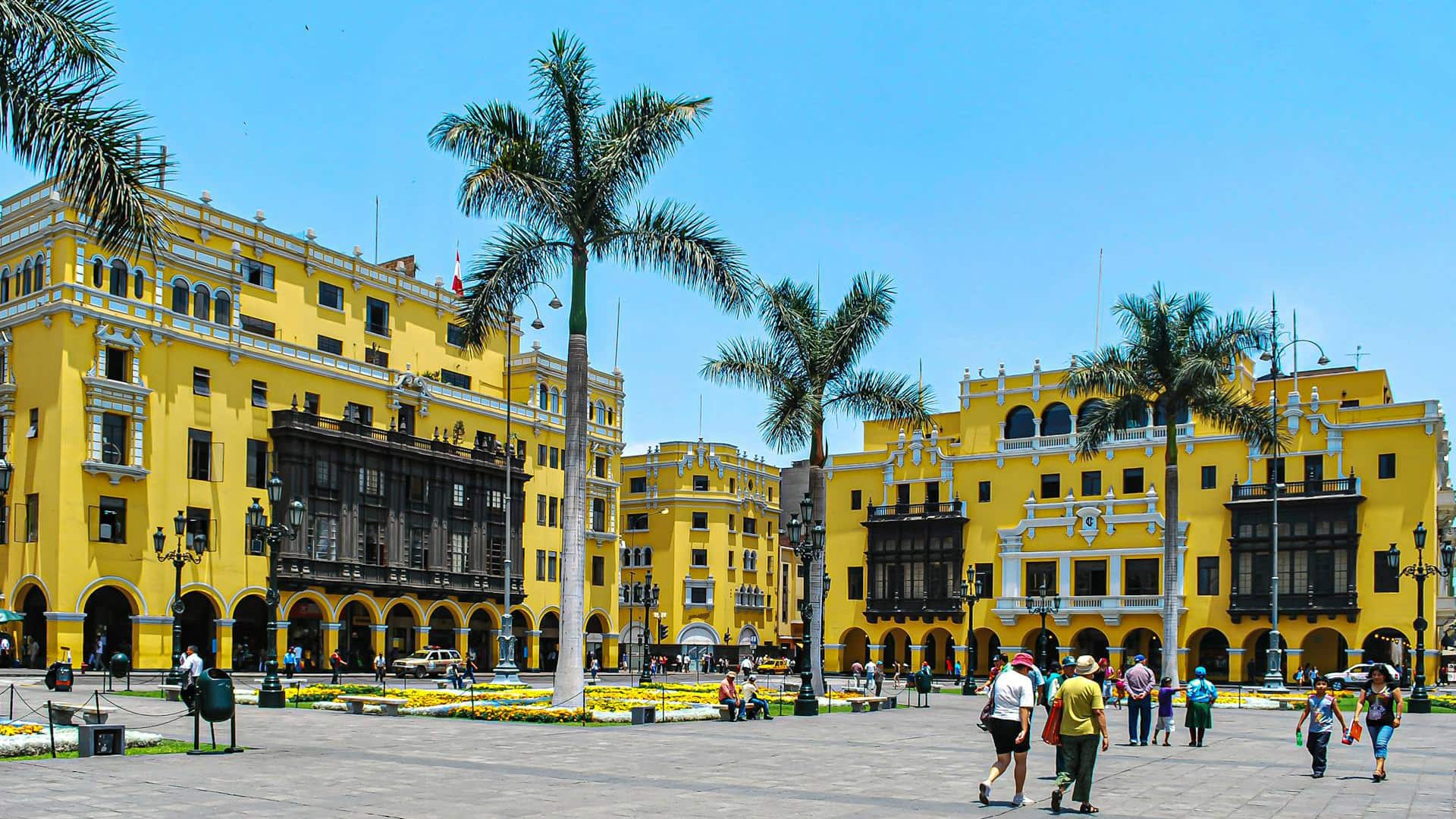
The second mistake is basing yourself in the Historic Centre. Many guides describe it as the best area to stay, and while it is worth visiting, it is not where you want your hotel. The streets around Plaza de Armas are lively during the day but empty quickly in the evening, the restaurant options are limited compared to Miraflores, and the accommodation tends to be lower quality for the price. Visit for a morning. Stay in Miraflores or Barranco.
Lima’s weather confuses almost everyone. The city sits in a coastal desert, but from roughly May through November, a thick layer of low cloud — the garúa — sits over the city. It is grey and overcast, sometimes for weeks at a time. But here is the thing most guides fail to mention: it almost never actually rains. You will not need a waterproof jacket. You might want a light layer for the damp chill, especially in July and August, but rain is not the issue. The gloom is.
Finally, most Lima travel guides list the same five attractions and move on. The truth is that Lima’s best experiences are not its monuments — they are sitting in a cevicheria at noon on a Tuesday, walking the clifftop path in Miraflores at sunset, or eating anticuchos from a street cart in Barranco at 10pm. This guide tries to capture that.
Lima has enough to fill three or four days comfortably. These are the places to visit in Lima that are genuinely worth your time, along with honest assessments of each.
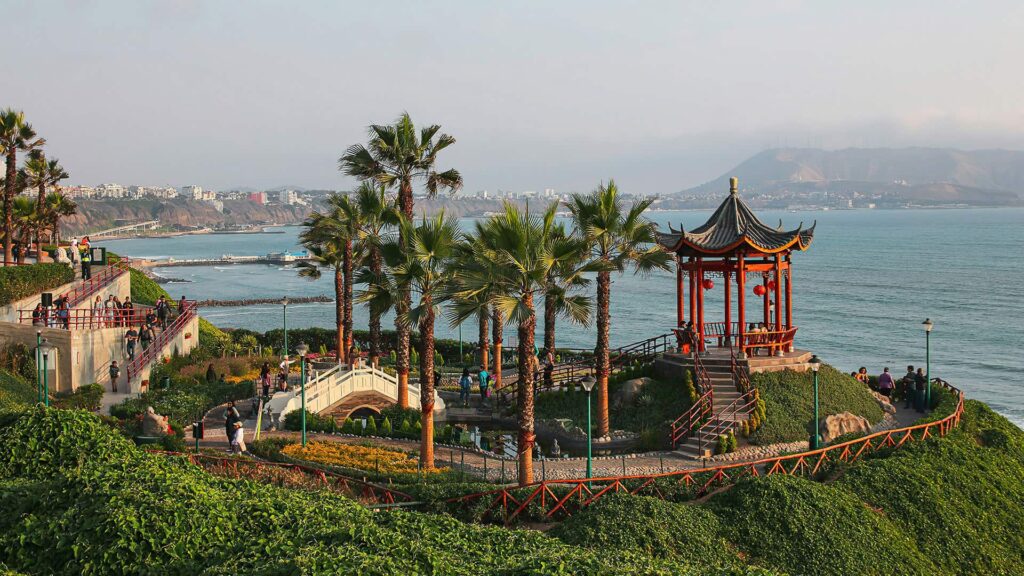
Miraflores is Lima’s most popular tourist district and the area where most first-time visitors stay. It sits on the cliffs above the Pacific, with well-maintained parks, a long clifftop boardwalk called the Malecón, and a good concentration of restaurants, shops, and hotels.
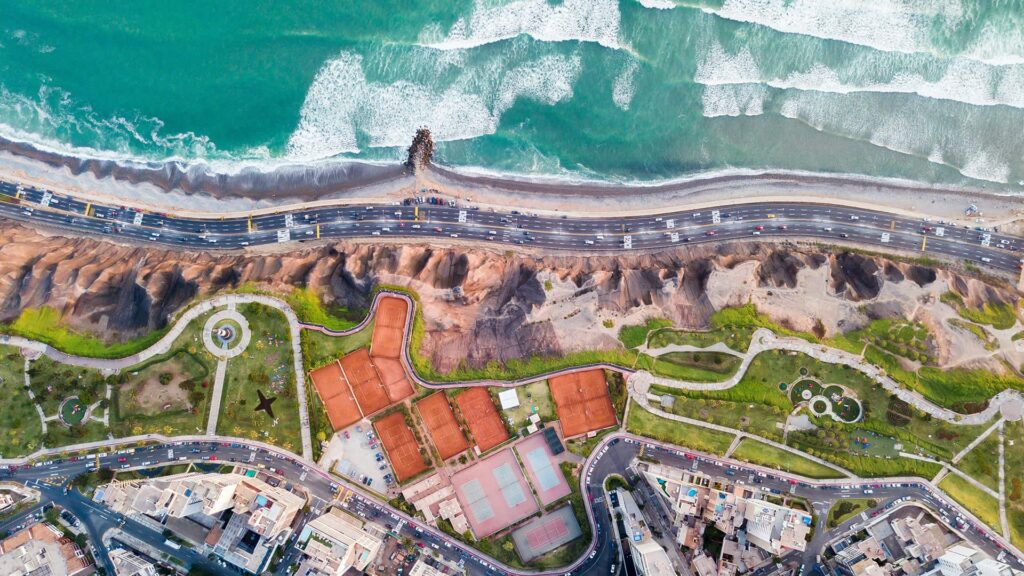
The Malecón walk is the highlight. It stretches several kilometres along the cliff edge, with views down to the ocean and the Costa Verde highway below. In the late afternoon, paragliders launch from the cliffs near Parque del Amor and drift along the coast — it is one of Lima’s most distinctive sights.
Miraflores is safe to walk around day and night, which is not true of every Lima neighbourhood. Expect well-kept streets, decent pavements, and a generally pleasant atmosphere. It can feel slightly sanitised compared to the rest of Lima, but for a first visit, that is not a bad thing.
Local tip: The Malecón is best walked in the late afternoon — you get the sunset light and the paragliders. The Parque Kennedy in central Miraflores is fine for people-watching and is famous for its resident cats, but it is not worth a special trip. The Larcomar shopping centre built into the cliff face has good views from its terraces, but the shops themselves are overpriced and unremarkable.
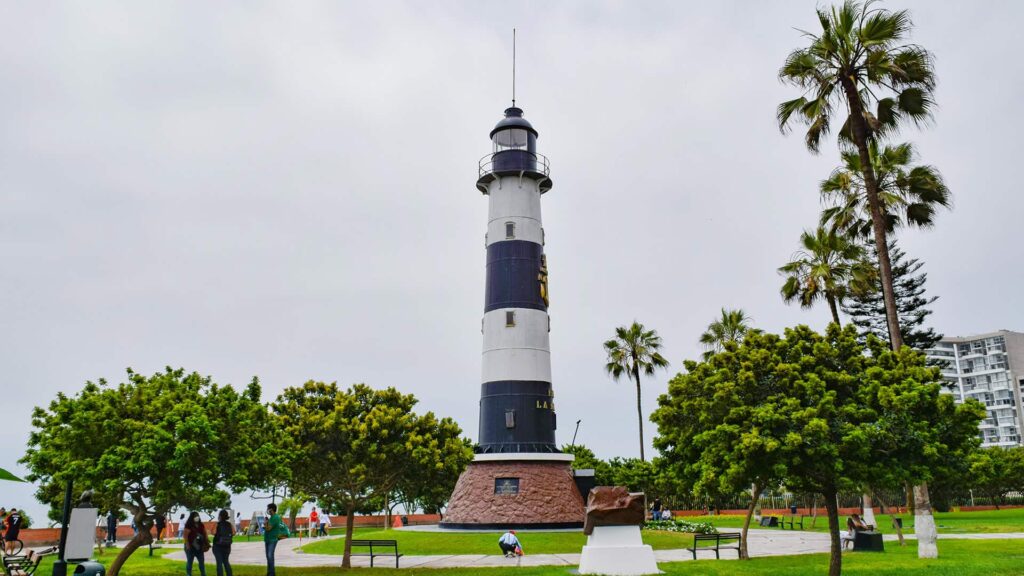
Barranco is Lima’s bohemian district — a small, walkable neighbourhood south of Miraflores known for its street art, colonial-era architecture, and lively bar and restaurant scene. It is the neighbourhood I recommend most for travellers who want to feel something beyond the standard tourist experience.
The Puente de los Suspiros (Bridge of Sighs) is the most photographed spot, and while it is attractive, the real pleasure of Barranco is wandering the surrounding streets and finding the murals, small galleries, and cafés tucked into converted colonial houses. The MATE gallery, dedicated to fashion photographer Mario Testino, is worth a stop.
Barranco has Lima’s best nightlife. On Friday and Saturday nights the bars along the main streets fill up, and there are peñas — venues with live Peruvian folk music — that are worth seeking out.
Local tip: Walk from Miraflores to Barranco along the Malecón — it takes about 40 minutes and the path is well-maintained and safe during daylight. Barranco is also where you will find some of Lima’s best casual restaurants, particularly for brunch and creative Peruvian-fusion cooking.
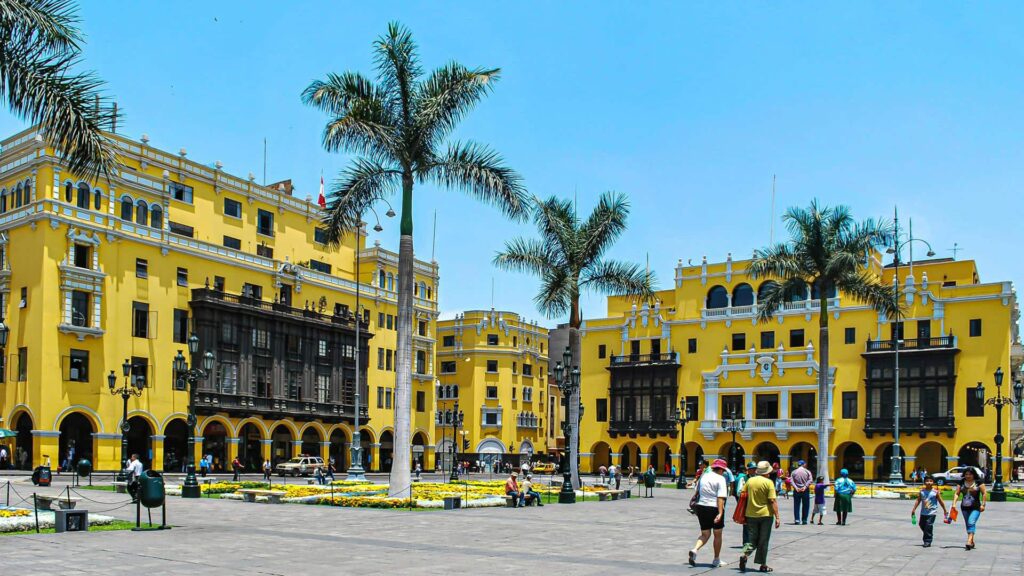
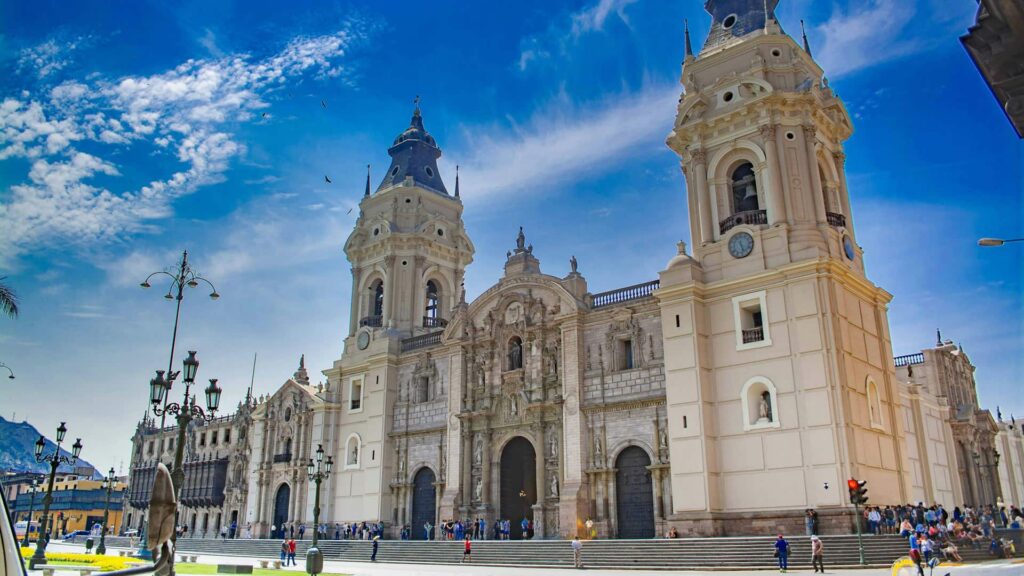
The Plaza de Armas is the main square of Lima’s Historic Centre and the original heart of the city, dating from the Spanish founding in 1535. The square is surrounded by the Government Palace, the Cathedral of Lima, and the Archbishop’s Palace — all of which are imposing in a heavy colonial style.
The Historic Centre received UNESCO World Heritage status, and several of the churches and monasteries are genuinely impressive. The Monastery of San Francisco is the standout, partly for its baroque library and partly for its catacombs, which contain the bones of an estimated 25,000 people arranged in geometric patterns underground.
The area around the plaza is busy during the day — street vendors, traffic, and crowds of local workers. It feels like a working city centre rather than a tourist precinct, which is part of its appeal but also means it requires more awareness of your surroundings than Miraflores.
Local tip: Visit on a weekday morning and combine the plaza, the Cathedral (free entry most days), and the San Francisco catacombs in one trip. The whole visit takes about three hours. Do not linger in the surrounding streets after dark — the Historic Centre empties out and is not recommended for evening walks. Take an Uber back.
San Isidro is Lima’s financial and diplomatic district — tree-lined streets, upscale restaurants, and a quieter atmosphere than Miraflores. It is not typically listed among the top tourist places in Lima, but it has a couple of things worth seeing.
The Bosque El Olivar is a pleasant park built around a grove of olive trees dating from the 1500s. It is a calm spot for a walk, especially compared to the busier parks in Miraflores. The restaurants in San Isidro tend to be excellent and less crowded than their equivalents in Miraflores — several of Lima’s best mid-range and upscale dining options are here.
Local tip: San Isidro is a good base for business travellers or anyone who wants a quieter stay. It is about 10 minutes by taxi from Miraflores and has its own excellent restaurant scene without the tourist markup.
The Larco Museum (Museo Larco) is Lima’s best museum and one of the best in South America. Housed in an 18th-century colonial mansion in the Pueblo Libre district, it holds a vast collection of pre-Columbian art and artefacts spanning 5,000 years of Peruvian history.
The collection is well-curated and clearly presented — you do not need to be a history enthusiast to enjoy it. The gold and silver gallery is striking, and the famous erotic pottery collection (yes, it is real) is in a separate gallery at the back.
Allow two to three hours. The museum garden has a pleasant café where you can sit afterwards. Entry costs around 35 soles (roughly £7 or $9).
Local tip: Go early in the day before tour groups arrive, ideally before 11am. The museum is about 20 minutes by taxi from Miraflores. Combine it with a visit to Huaca Pucllana if you want a full day of Lima’s historical sites.
Huaca Pucllana is a pre-Inca pyramid made of stacked adobe bricks, dating from around 400 AD. It sits right in the middle of Miraflores, surrounded by modern apartment buildings — an incongruous sight that most visitors do not expect.
The site is best visited at night, when it is illuminated and the contrast with the surrounding city lights is dramatic. Guided tours run in the evening and last about 45 minutes. There is a small on-site museum, and the restaurant next to the ruins (also called Huaca Pucllana) serves good Peruvian food with the lit-up pyramid as a backdrop.
Local tip: The night tours are far more atmospheric than daytime visits. Book the restaurant for dinner afterwards — ask for a table with a view of the huaca. Entry is around 15 soles.
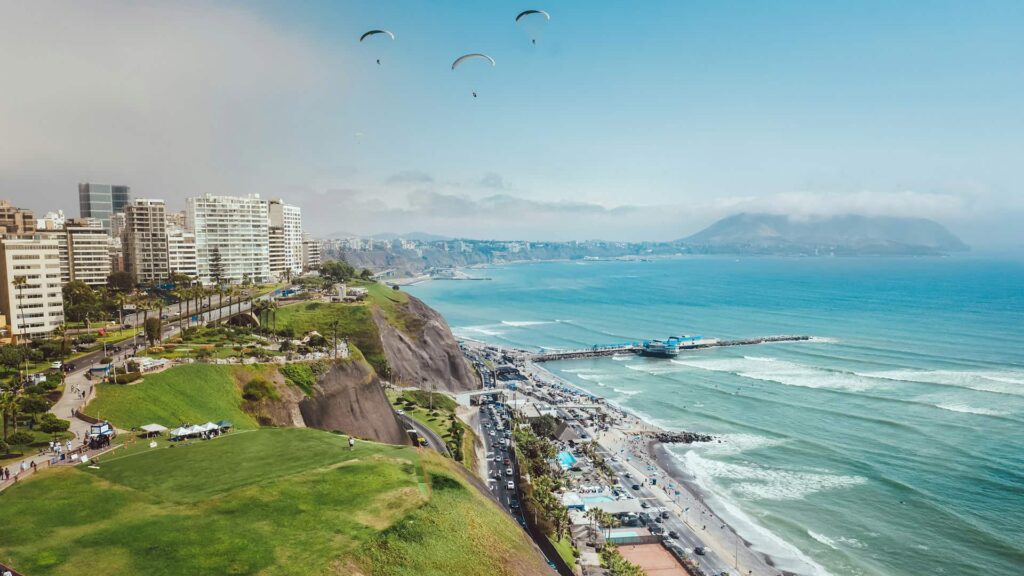
The Costa Verde is the stretch of coastline running below Lima’s cliffs, with beaches used by surfers and locals in summer (January to March). The beaches are not the draw for most tourists — the water is cold, the sand is rocky in places — but the views from the clifftop Malecón above are impressive, particularly at sunset.
Local tip: If you want to try surfing, Makaha and Punta Roquitas in Miraflores have consistent waves and board rental nearby. A wetsuit is essential year-round. Do not swim at unguarded beaches — currents can be strong.
Parque del Amor (Love Park) sits on the Malecón in Miraflores, overlooking the ocean. It features a large sculpture of a couple embracing and mosaic-tiled benches in the style of Gaudí’s work in Barcelona. It takes about 15 minutes to see and works best as a stopping point on a Malecón walk rather than a standalone destination.
Local tip: Come in the late afternoon, watch the paragliders launching nearby, and continue walking south toward Barranco.
Callao is Lima’s port district, historically rough but partly regenerated. Monumental Callao is a collection of street art and galleries in converted warehouses — interesting but somewhat curated. La Punta, the peninsula at the tip, is more genuine: a quiet residential area with seafood restaurants, a boardwalk, and views across to San Lorenzo island.
Local tip: Take an Uber to La Punta, walk the waterfront, and have ceviche for lunch — it tends to be excellent and cheaper than Miraflores. Get an Uber back rather than walking through broader Callao, which remains inadvisable for tourists in many areas.
Pachacamac is a sprawling archaeological site about 40 minutes’ drive southeast of central Lima. It was a major pre-Inca religious centre, occupied for over 1,000 years, and contains temples, pyramids, and a large on-site museum.
The site is impressive for its scale and its setting — overlooking the Lurín Valley with the Pacific in the distance. It is much larger than Huaca Pucllana and gives a better sense of the civilisations that inhabited the Lima area long before the Spanish arrived.
Allow a full morning for the visit, including travel time. The site is exposed and can be hot in summer, so bring water and sun protection. Entry is around 15 soles, with an additional fee for the museum.
Local tip: Hire a taxi for the round trip rather than trying to arrange separate Ubers — the site is outside the area where rides are easy to find. Agree a price in advance (around 80–100 soles for the return trip with waiting time).
Lima is regularly cited as the best food city in South America, and having eaten here extensively, I think that reputation is earned. The range and quality of food — from street carts to fine dining — is extraordinary. This section covers what to eat, where to eat it, and what to expect.
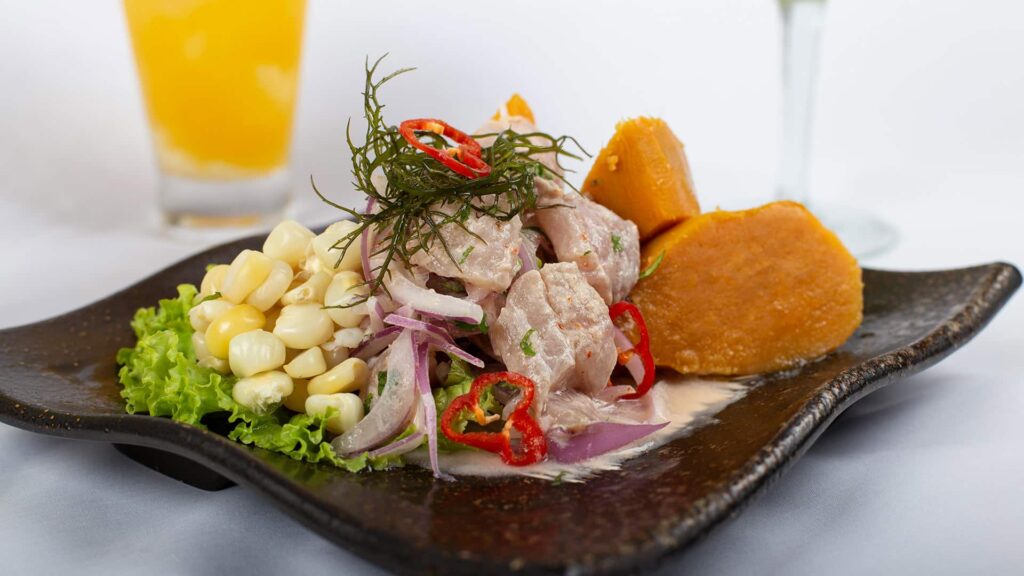
Ceviche is raw fish cured in citrus juice (usually lime), mixed with red onion, chilli, and coriander, and served with sweet potato and toasted corn. It is Peru’s national dish, and Lima is the best place in the country to eat it.
The key thing to know: ceviche is a lunchtime dish. Traditional cevicherias open at around 11am and close by 4 or 5pm. Eating ceviche at dinner is possible in tourist-oriented restaurants but is not what locals do, and the fish will not be as fresh.
Budget: La Mar (Miraflores) is the most famous cevicheria in Lima. The ceviche is excellent, but expect queues at weekends and prices around 50–70 soles per plate. For something more affordable, try the ceviche at Mercado de Surquillo — simple, fresh, and around 20 soles.
Mid-range: El Mercado (also Miraflores, from chef Rafael Osterling) does exceptional seafood in a more relaxed setting than La Mar.
Splurge: Maido, which blends Peruvian and Japanese techniques, serves a ceviche that is one of the best things I have eaten in Lima. Expect to pay accordingly.
Mercado de Surquillo is the market I recommend for first-time visitors. It is a working local market — not a sanitised food hall — where you can eat at stalls inside the market building. The juice stands are excellent (try lucuma or maracuyá), and the lunch menus are filling and cheap.
Anticuchos are beef heart skewers, grilled over charcoal and served with potatoes and a spicy sauce. They are sold from street carts throughout Lima, particularly in the evenings. The anticuchos at the carts in Barranco and near Parque Kennedy in Miraflores are the best I have found. If beef heart sounds alarming, the taste and texture are closer to steak than offal — give it a try.
Other street food to look for: tamales (corn dough stuffed with meat, wrapped in banana leaves — best at breakfast), picarones (sweet pumpkin doughnuts drizzled with fig syrup — sold from evening street carts), and butifarra (a pork sandwich from a street stand, deceptively simple and excellent).
Practical note: If your stomach is sensitive, ease into street food gradually. Start with cooked items from busy stalls (high turnover means fresh food) and build up. The market stalls in Surquillo are generally safe — look for stalls with lots of locals eating.
Central and Maido are the two restaurants that put Lima on the international food map. Central uses ingredients from every altitude zone in Peru in a tasting menu format. Maido focuses on Nikkei (Japanese-Peruvian) cuisine. Both consistently appear in the World’s 50 Best Restaurants ranking.
The reality check: both require booking weeks or months in advance, and tasting menus cost upward of $150–200 per person before drinks. If you can get a reservation and the budget allows, Central in particular is a remarkable meal. If not, you are not missing Lima’s food story.
More accessible alternatives: Isolina in Barranco serves traditional Peruvian comfort food (huge portions, moderate prices), Baan in Barranco does outstanding Thai-Peruvian food, and Costanera 700 in Miraflores is excellent for seafood without the celebrity-chef pricing.
Two of Lima’s most distinctive food traditions are almost unknown to visitors before they arrive. Nikkei is Japanese-Peruvian cuisine, born from a large wave of Japanese immigration in the late 1800s. The result is food that combines Japanese technique (sashimi, tempura, precision) with Peruvian ingredients (aji peppers, lime, coriander). Maido is the pinnacle, but there are dozens of excellent Nikkei restaurants at every price point.
Chifa is Chinese-Peruvian food, originating from the Chinese community that settled in Lima during the same period. Chifa restaurants are everywhere in Lima — locals eat chifa the way Britons eat a curry. The food is hearty, flavourful, and cheap. Lomo saltado, one of Peru’s most popular dishes (stir-fried beef with tomatoes, onions, and chips), is itself a chifa creation.
For chifa, try Chifa Titi in the San Borja district or the chifa restaurants along Calle Capón in Lima’s Chinatown in the Historic Centre. For Nikkei, Osaka and Hanzo in Miraflores offer good mid-range options.
Choosing where to stay in Lima matters more than in most cities. The distances between districts are large, traffic is heavy, and the quality of your trip depends significantly on your base.
Miraflores is where most tourists stay, and for good reason. It is the safest district, the most walkable, and has the highest concentration of hotels, restaurants, and services. The area around Parque Kennedy and along the Malecón has the widest choice of accommodation, from backpacker hostels to five-star hotels. You can walk to most Miraflores attractions, and Uber rides to other districts are quick and cheap.
The downside is that Miraflores can feel removed from the “real” Lima — clean, well-maintained, and full of international chains.
Barranco is my personal recommendation for travellers who want more character. Smaller and more atmospheric than Miraflores, with better street art, better bars, and a more interesting restaurant scene. It is safe for walking. Accommodation options are more limited, but if you are a younger traveller, a couple, or someone who values atmosphere over convenience, Barranco is the better choice.
San Isidro is Lima’s most upscale district — embassies, corporate offices, and high-end residential streets. Quieter than Miraflores, with excellent restaurants, but less to do as a tourist. It suits business travellers or anyone who prefers calm surroundings.
Where not to stay: The Historic Centre (Cercado de Lima), La Victoria, Callao, and most districts outside Miraflores, Barranco, and San Isidro are not recommended for tourists to base themselves. This is not a safety judgement on the city as a whole — it is practical advice. These areas lack the infrastructure, the safety standards, and the proximity to attractions that make a tourist visit comfortable.
If you only have one day, focus on Miraflores and the Historic Centre.
Morning: Walk the Malecón in Miraflores, stop at Parque del Amor, then take an Uber to the Historic Centre. Visit Plaza de Armas and the San Francisco catacombs.
Afternoon: Return to Miraflores for a late ceviche lunch at La Mar or El Mercado. Walk through Parque Kennedy, then along the clifftop path.
Evening: Dinner in Barranco — Isolina for traditional Peruvian, or a bar along the main strip for drinks and live music.
Two days lets you see Lima properly without rushing.
Day 1: Morning in the Historic Centre (Plaza de Armas, catacombs, Chinatown for chifa lunch). Afternoon at the Larco Museum. Evening dinner in San Isidro or Miraflores.
Day 2: Morning walk along the Malecón and Miraflores coast. Ceviche lunch at the market or a cevicheria. Afternoon in Barranco — street art, galleries, MATE museum. Evening night tour of Huaca Pucllana, dinner overlooking the illuminated ruins.
With three or more days, add Pachacamac ruins (half-day trip), a cooking class (several good options in Miraflores and Barranco), a day trip to La Punta for seafood and a coastal walk, and time to eat at more of Lima’s excellent restaurants. Three days is ideal for anyone who considers food a priority — Lima rewards extended eating.
Safety is the first thing many travellers ask about, and it is a fair question. The short answer: Lima is broadly safe for tourists who take sensible precautions. It is not dangerous in the way that some Central American capitals can be, but it does require more awareness than, say, European cities.
Safe areas for walking: Miraflores, Barranco, and San Isidro are safe to walk day and night. The Historic Centre is fine during the day but should be avoided on foot after dark.
Transport: Use Uber or InDriver for rides. Do not hail taxis on the street — unregistered taxis are the main transport-related risk for tourists. Uber is widely available, inexpensive, and reliable in Lima. InDriver is a local alternative where you negotiate the fare.
Phone snatching: This is the most common petty crime affecting tourists. It happens mostly in busy areas and on certain streets in the Historic Centre and surrounding districts. Keep your phone in your pocket in crowded areas. Do not walk while looking at your phone screen in unfamiliar neighbourhoods.
Common scams: The usual tourist scams apply — inflated taxi fares (use apps), “helpful” strangers who guide you to shops for a commission, and overcharging at unmetered taxis. These are annoyances, not dangers.
The lima peru travel advisory context: Various governments issue travel advisories for Peru. Most advise normal precautions for Lima’s tourist areas, with increased caution for certain other regions. If you are checking your government’s advisory before travelling — which is sensible — you will likely find that Lima’s main tourist districts are assessed as low-risk. The US State Department’s advisory for Peru generally recommends exercising increased caution, which is the same level as many popular tourist destinations.
The practical summary: stay in Miraflores, Barranco, or San Isidro. Use ride-hailing apps. Keep your belongings secure. Do not flash expensive items. You will be fine.
Lima’s climate is unusual. The city sits in a coastal desert, so rainfall is almost zero year-round. But from roughly May through November, a thick layer of low cloud called the garúa covers the city. The skies are grey, the air is damp and cool, and temperatures sit around 14–18°C (57–64°F). It does not rain, but it is gloomy.
From December through April, the garúa lifts. Skies clear, temperatures reach 25–30°C (77–86°F), and the city feels entirely different. This is Lima’s summer, and it is when locals head to the beaches.
Best months to visit: January and February for the best weather, or December and March for warm weather with slightly fewer crowds. If you are visiting Peru primarily for Cusco and Machu Picchu, the dry season there (May to September) overlaps with Lima’s grey season — which means you will likely see Lima under overcast skies. This is fine. The food, the culture, and the attractions are the same regardless of weather. Just do not expect sunshine.
What to pack: Light layers for the grey season, sun protection for summer. A light jacket is useful year-round — evenings near the coast can be cool even in summer.
Jorge Chávez International Airport is in Callao, about 45–60 minutes from Miraflores depending on traffic.
Uber/InDriver: Order from the arrivals area. Costs around 25–40 soles (£5–8 / $7–10). You will need a working phone — buy a SIM card from the kiosks in arrivals before ordering.
Official airport taxi: Booked at the counter inside arrivals. More expensive (60–80 soles) but pre-arranged and straightforward if you arrive late.
Private transfer: Pre-booked through your hotel or a transfer service. Typically $15–25. The most comfortable option after a long flight.
Do not accept offers from unofficial taxi drivers in the terminal — this is where scams are most common.
Uber and InDriver are how most people — locals and visitors — get around Lima. Both are cheap by international standards (a 20-minute ride rarely costs more than 15–20 soles) and far safer and more reliable than street taxis. InDriver lets you propose a fare, which the driver can accept or counter. Both apps work well throughout the tourist districts.
Walking is practical in Miraflores and Barranco. Both are flat, reasonably well-paved, and pleasant to explore on foot. Walking between the two takes about 40 minutes along the Malecón.
The Metropolitano is Lima’s bus rapid transit system. It runs on a dedicated lane, but the routes are not intuitive for tourists and it does not serve most tourist destinations conveniently. I would not recommend it unless you are comfortable navigating local transit systems.
Taxis: If you must use a taxi, only use registered ones (they have a number on the side and a registration visible on the dashboard). Agree the fare before getting in. But honestly, Uber is easier in every way.
Lima is the transport hub for the whole country. Almost every trip to another region of Peru either starts or connects through here.
The flight takes about 1 hour 20 minutes and costs $50–150 each way. LATAM and Sky Airlines are the main carriers. The bus alternative takes 20–22 hours through the Andes — spectacular but only for people with time and a tolerance for winding mountain roads.
Paracas (Ballestas Islands, coastal desert) and Huacachina (desert oasis, sand dunes) are popular stops south of Lima. Cruz del Sur and Oltursa run comfortable buses — about 3.5 hours to Paracas, 4.5 hours to Ica/Huacachina. Many travellers combine both in a two-day side trip.
Huaraz is the base for trekking in the Cordillera Blanca. The bus journey takes about 8 hours on paved roads. Cruz del Sur and Movil Tours are reliable. Huaraz is at 3,050 metres, so spending time in Lima first helps with acclimatisation.
Peru’s second city, gateway to the Colca Canyon. The flight takes 1.5 hours. The overnight bus takes around 15 hours — Cruz del Sur’s cama (lie-flat) service makes it manageable. Most travellers with limited time should fly.
Currency: The Peruvian sol (PEN). ATMs are widely available in Miraflores and other tourist areas. Withdraw soles, not dollars — you will get a better rate. Avoid the cambistas (street money changers) unless you know what you are doing; the exchange rate is marginally better but the risk of counterfeit notes is real. Most restaurants and shops in Miraflores accept cards, but carry cash for markets, small restaurants, and taxis.
Language: Spanish. English is spoken in upscale hotels and tourist-facing restaurants in Miraflores, but not widely elsewhere. Learning basic Spanish phrases — or using a translation app — will make your experience significantly better. Limeños are generally patient and helpful with visitors making an effort.
Tipping: Restaurants typically add a 10% service charge to the bill. If they do not, 10% is standard. For tour guides, 20–30 soles per person for a half-day tour is reasonable. Tipping taxi drivers is not expected, though rounding up is appreciated.
SIM cards: Buy one at the airport arrivals hall — Claro and Movistar both have kiosks. A prepaid SIM with data costs around 20–30 soles and lasts for your trip. Bitel is the cheapest option but has weaker coverage. Having mobile data is essential for Uber and navigation.
Internet: Wifi is reliable in hotels and cafés throughout Miraflores and Barranco. Speeds are generally good.
Water: Do not drink tap water. Bottled water is cheap (1–2 soles for 500ml) and available at every corner shop. Most restaurants serve bottled water automatically — specify “sin gas” for still or “con gas” for sparkling.
Altitude: Lima is at sea level. There are no altitude concerns here. However, if your next stop is Cusco (3,400 metres) or Lake Titicaca (3,800 metres), spending your first two days in Lima helps your body begin adjusting. Consider taking altitude sickness medication (acetazolamide) — consult your doctor before the trip.
Yes. Lima deserves two to three days on any Peru itinerary. The food is reason enough, but there is more here than restaurants — you get pre-Inca history, a dramatic Pacific coastline, genuinely interesting neighbourhoods, and a city that feels alive in a way that smaller Peruvian tourist towns do not.
Most people who skip Lima regret it. Most people who give it two or three days are glad they did. It is not a pretty city in the conventional sense — it is grey, noisy, and sprawling. But it is one of the most rewarding cities in South America for travellers who are curious, hungry, and willing to look past the surface.
Spend the time. You will not regret it.
How many days do you need in Lima? Two days is the sweet spot for most travellers. This gives you enough time to see the Historic Centre, walk the Miraflores coast, visit a museum, and eat well. If food is a priority, three days lets you explore Lima’s restaurant scene properly.
Is Lima safe for tourists? Lima is broadly safe for tourists in the main visitor districts of Miraflores, Barranco, and San Isidro. Use Uber or InDriver instead of street taxis, keep your phone secure in crowded areas, and avoid walking in the Historic Centre after dark. Standard travel precautions are sufficient.
Is Lima worth visiting or should I skip it? Lima is worth visiting. It has some of the best food in South America, interesting pre-Inca archaeological sites, and a dramatic Pacific coastline. Most travellers who skip it wish they had not. Two to three days at the start of a Peru trip is ideal and also helps with altitude acclimatisation before heading to Cusco.
What is the best time to visit Lima? December to March offers the warmest and sunniest weather. May to November is cooler and overcast, though it almost never rains. If your Peru itinerary is driven by Cusco’s dry season (May–September), you will see Lima under grey skies — this is fine and should not deter you.
Where should I stay in Lima as a tourist? Miraflores is the best area for first-time visitors — it is safe, walkable, and has the widest range of hotels and restaurants. Barranco is better for atmosphere, nightlife, and street art. San Isidro suits business travellers or those wanting a quieter stay. Avoid basing yourself in the Historic Centre or other districts outside these three.