Physical Address
304 North Cardinal St.
Dorchester Center, MA 02124
Physical Address
304 North Cardinal St.
Dorchester Center, MA 02124

The best month to visit Peru depends entirely on where you’re going. That sounds like a cop-out, but it’s the honest answer — Peru has 30 different climate zones, and the “right” time for Cusco is the wrong time for the Amazon.
I’ve lived in Lima since 2022, and I’ve travelled around Peru in every season. I’ve been caught in landslides that closed roads for days during the rainy season, and I’ve had perfect blue skies in Cusco in July when it dropped below freezing at night. This guide breaks down what to actually expect, month by month, so you can plan around the weather rather than hope for the best.
If you’re planning a classic Peru trip — Lima, Cusco, Machu Picchu, maybe the Sacred Valley — May, June, and September are the best months to travel to Peru. You get dry weather in the highlands, manageable crowds, and reasonable prices.
July and August are also dry, but they’re peak tourist season. Expect higher prices, busier trails, and sold-out Inca Trail permits.
The worst time for the highlands is January to March, when heavy rain can cause serious problems — flooded roads, cancelled trains, and landslides that make entire routes impassable. I’m not exaggerating. I’ve seen the road between Cusco and the Sacred Valley completely washed out.
| Jan | Feb | Mar | Apr | May | Jun | Jul | Aug | Sep | Oct | Nov | Dec | |
|---|---|---|---|---|---|---|---|---|---|---|---|---|
| Cusco & Machu Picchu | Avoid | Avoid | Avoid | OK | Best | Best | Good* | Good* | Best | OK | Risky | Avoid |
| Lima & Coast | Best | Best | Best | Good | Grey | Grey | Grey | Grey | Grey | Grey | Grey | Best |
| Amazon | Wet | Wet | Wet | Wet | Good | Best | Best | Best | Best | Good | Wet | Wet |
| Arequipa & Colca | OK | OK | OK | Good | Best | Best | Best | Best | Best | Good | OK | OK |
| Lake Titicaca | Avoid | Avoid | Avoid | OK | Good | Best | Best | Best | Good | OK | Risky | Avoid |
| Huaraz & Treks | Avoid | Avoid | Avoid | Risky | Best | Best | Good* | Good* | Best | Risky | Avoid | Avoid |
| Northern Peru & Máncora | Best | Best | Good | Good | Good | Good | Good | Good | Good | Good | Good | Best |
*Good weather but peak crowds and prices. Best = ideal conditions. Book ahead for June–August across all highland destinations.
Peru doesn’t really do spring, summer, autumn, winter — at least not in the way you’d recognise. Instead, it broadly splits into two seasons.
Dry season (May to October): Clear skies in the Andes and highlands. Cold nights, especially at altitude. This is when most people visit Cusco, Machu Picchu, and the trekking routes.
Wet season (November to April): Rain in the highlands and jungle, sometimes heavy. Roads flood. Trails close. The Inca Trail shuts entirely in February for maintenance. Lima, ironically, has its best weather during this period — warm, sunny, and clear.
The coast, the highlands, and the jungle each have their own patterns. What follows is a breakdown of the key regions.
The best month to visit Cusco is June — dry, clear, and cold at night but warm during the day. May and September are close seconds with fewer crowds.
July and August are fine weather-wise but packed with tourists. Machu Picchu in August can feel uncomfortably crowded, and prices for hotels and flights spike noticeably.
Avoid January to March if you can. The rain in Cusco during these months isn’t just inconvenient — it’s disruptive. Mudslides regularly block the railway to Aguas Calientes, and in bad years the train service is suspended for weeks. In 2024, heavy rains caused landslides that stranded tourists in Aguas Calientes and forced helicopter evacuations.
If you must visit during the rainy season, aim for November or April — the shoulder months when rain is lighter and the worst disruptions are less likely.
A practical note on altitude: Cusco sits at 3,400 metres. It doesn’t matter what month you arrive — you’ll feel the altitude. Spend at least two days acclimatising before doing anything strenuous. If you’re arriving from Lima, which is at sea level, the jump is significant.
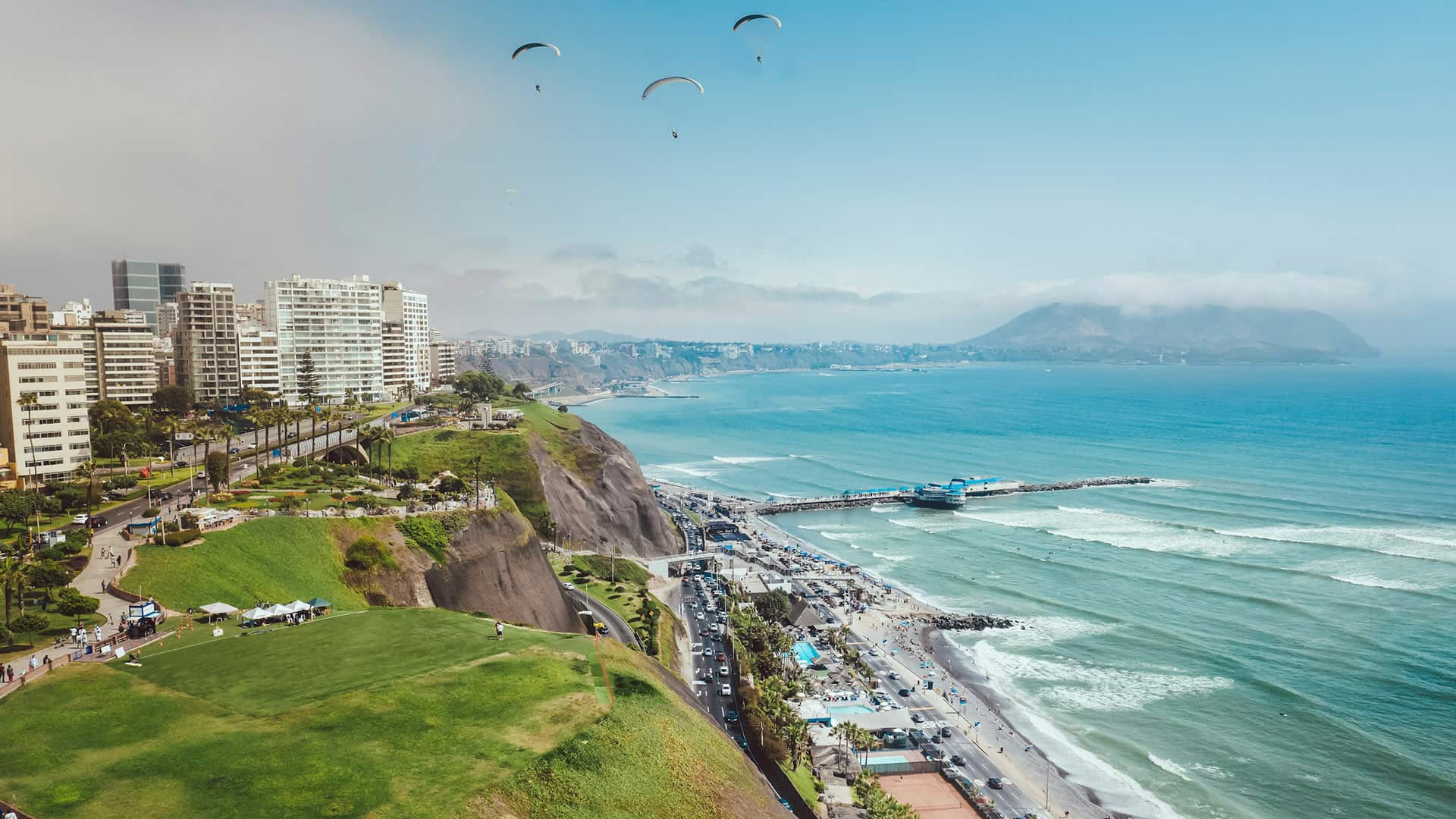
Lima’s weather is the opposite of what most visitors expect. The city is overcast and grey from roughly May through November — a persistent low cloud called the garúa sits over the coast and blocks the sun. It almost never rains, but it’s gloomy and cool, around 14–18°C.
From December to April, the cloud lifts. Lima in January and February is warm, sunny, and genuinely pleasant — 25–30°C with clear skies.
Here’s the thing, though: Lima’s main attractions are food, history, and culture. None of those depend on weather. If your trip takes you to Lima during the grey months, it’s absolutely still worth spending two or three days there. You’ll just want a light jacket for the evenings. For more on what to do there, see my full Lima travel guide.
The Amazon is hot and humid year-round. You’re not escaping the heat whatever month you go.
Dry season (May to October): Lower water levels, which means more exposed riverbanks and better wildlife spotting — animals congregate around shrinking water sources. Trails are more walkable. Fewer mosquitoes. This is the more comfortable time to visit.
Wet season (November to April): Water levels rise dramatically. You’ll travel more by boat, and some areas are only accessible by canoe through flooded forest. Wildlife is harder to spot, but the landscape is extraordinary — vast stretches of jungle underwater. Mosquitoes are relentless.
The best months for an Amazon visit are June to September. If you’re combining it with Cusco, the timing lines up neatly — both are best during the same dry window.
Arequipa has arguably the best climate in Peru — sunny for most of the year with low humidity. The city itself is pleasant in almost any month.
The Colca Canyon is a different story. The rainy season (December to March) brings wet conditions that can make trekking routes muddy and some roads difficult. June to September is ideal for Colca — dry trails, clear skies, and the best chance of seeing condors riding the thermal currents in the morning.
Lake Titicaca is at 3,800 metres, so it’s cold year-round. Even in the “warm” months, temperatures drop sharply after sunset.
Visit between May and October for dry weather and clear skies. June to August gives you the best daytime conditions, but nights can drop below zero. Bring proper layers — not just a hoodie. The cold at Titicaca catches people off guard more than almost anywhere else in Peru.
The rainy season (December to March) brings grey skies and wet conditions that make boat trips to the islands less enjoyable.
If you’re going to Huaraz for trekking — the Santa Cruz trek, Laguna 69, or anything in the Cordillera Blanca — timing is everything.
The trekking season runs from May to September. Outside this window, trails can be dangerously muddy, mountain passes get snow-covered, and visibility drops. July and August are the driest and most popular months, but June and September are slightly quieter with similar conditions.
Do not plan a Cordillera Blanca trek in the rainy season. The risk of landslides and trail closures is real, and mountain rescue at altitude is complicated and slow.
Northern Peru is the region most travellers overlook, and its weather follows different rules from the south.
Máncora and the northern beaches are best from December to March — this is when you get hot, sunny weather and warm ocean water. It’s Peru’s closest thing to a proper beach holiday. Outside these months, the coast is cooler and greyer, though Máncora stays warmer than Lima year-round.
Chachapoyas and Kuélap — the northern highlands — sit lower than Cusco and have a milder climate. The dry season (May to September) is best for visiting, but even in the wet months the rain tends to be lighter than in the southern Andes. If you want to see major ruins without the Cusco crowds, Kuélap is worth the detour.
Trujillo and Chiclayo on the northern coast are dry and warm most of the year. The archaeological sites here — Chan Chan, Huaca de la Luna, Sipán — can be visited in any month without weather concerns.
Here’s what to expect across Peru for each month. This is aimed at travellers planning a typical trip that includes the highlands.
The peak of the rainy season. Heavy rain in the highlands and jungle. The Inca Trail closes in February. Roads between major destinations can become impassable — I’ve personally had a bus journey from Cusco rerouted by 6 hours because of a landslide that wiped out a section of road. Not unusual.
Lima has its best weather — hot and sunny. The coast is at its warmest, and Limeños head to the beaches.
Verdict: Avoid the highlands. Fine for Lima and the coast.
The tail end of the rains. March is still wet in the highlands, but by mid-April conditions improve rapidly. Late April can be excellent — the landscape is green from the rains, crowds haven’t arrived yet, and prices are lower.
Verdict: April is a strong shoulder-month pick. March is risky.
The start of the dry season. Cusco clears up, trekking routes open, and tourist numbers are still low. This is one of the best months to travel to Peru if you want good weather without peak-season crowds and prices.
Verdict: Excellent. One of the best months overall.
The best month to visit Cusco. Dry, clear, sunny days. Cold nights. The Inti Raymi festival (Festival of the Sun) takes place on 24th June in Cusco and is worth seeing if your dates align — though the city fills up around this time.
Lima’s grey season is in full effect. Overcast but functional.
Verdict: Ideal for the highlands. Book ahead for Inti Raymi week.
Peak tourist season. The weather in the highlands is at its best — dry and sunny — but everywhere is busy. Machu Picchu tickets sell out well in advance. Inca Trail permits for July and August are often gone by January. Hotel prices in Cusco can double compared to May.
This is also the coldest time in the highlands. Cusco nights regularly drop to 0–5°C, and Titicaca is freezing. Pack properly.
Verdict: Great weather, high prices, big crowds. Book everything early.
The dry season is winding down, but September is still reliably dry in the highlands. Tourist numbers drop after the August peak, prices soften, and you get the benefit of six months of clear weather having dried everything out. This is arguably the best-value month for a Peru trip.
Verdict: Excellent. My personal favourite month for the highlands.
A transitional month. The highlands start getting occasional afternoon showers, but mornings are usually clear. Still a decent time to visit, though less reliable than September.
Verdict: Good but not guaranteed. Have flexible plans.
The rains return. The first month of the wet season is generally manageable — showers tend to be short and afternoon-heavy — but conditions vary year to year. Some years November is fine; others it rains hard from the first week.
Verdict: A gamble. If you’re flexible and can adjust plans, it’s possible. If you’re on a fixed itinerary with trekking, avoid it.
Full wet season in the highlands. Lima’s best weather begins. The coast is warm and sunny. December is a good time for a Lima-and-coast-focused trip, but not ideal for Cusco and the mountains.
Christmas and New Year bring domestic travel, so book accommodation on the coast in advance.
Verdict: Good for the coast. Not recommended for highland trekking.
Peru’s calendar is packed with festivals, and some of them are worth building your trip dates around. Others are worth knowing about so you can book ahead — or avoid the chaos.
The Festival of the Sun. A massive re-enactment of an Inca ceremony held at Sacsayhuamán, just above Cusco. It’s the biggest cultural event in Peru’s tourist calendar, and the city fills up completely. Hotels double their prices for the week. If you want to see it, book accommodation and flights months in advance.
My honest take: the main ceremony is impressive but heavily staged and ticketed. The street celebrations in the days leading up to it — parades, dancing, and music through Cusco’s streets — are often more enjoyable and free.
Easter is a big deal across Peru, with processions, special dishes, and a general holiday atmosphere. Cusco’s celebrations are particularly elaborate. The downside: Peruvians travel heavily during Semana Santa, so prices rise and popular destinations fill up. If your trip overlaps, book everything in advance.
Peru’s independence celebrations. The whole country takes a holiday, and Peruvians from Lima head to the coast, the mountains, or their family’s home town. Expect higher prices and busy transport in the last week of July. Domestic flights and buses sell out early. The upside: there’s a festive energy everywhere, with concerts and events in public spaces across the country.
A huge festival of music and dance on the shores of Lake Titicaca. Colourful, loud, and genuinely spectacular — one of the largest folk festivals in South America. The catch: it falls in February, which is deep in the rainy season. If you’re set on attending, build flexibility into your transport plans. Roads around Puno can be affected by rain.
Corpus Christi (60 days after Easter, celebrated particularly in Cusco) — traditional food stalls fill the Plaza de Armas. Worth timing if you’re already in Cusco.
Paucartambo festival (mid-July, Cusco region) — a smaller, more traditional celebration in a village about 4 hours from Cusco. Less touristy, more authentic. Worth the detour if your dates align.
Qoyllur Rit’i (late May or early June, Cusco region) — a high-altitude pilgrimage festival at over 4,600 metres. Not for casual tourists, but extraordinary if you’re physically prepared and willing to camp in freezing conditions.
I want to be direct about this because most travel guides gloss over it.
The rainy season in Peru’s highlands (December to March) is not just “bring a waterproof jacket” weather. It is genuinely disruptive. Roads that are your only route between major destinations get washed away. The rail line to Machu Picchu is vulnerable to landslides. Bus journeys that normally take 8 hours can take 20 or not happen at all.
In bad years — and they come around regularly — entire towns become cut off. Travellers get stranded. Insurance claims get complicated.
I’m not saying don’t come to Peru in the rainy season. Lima and the coast are great in January. But if your trip depends on getting to Cusco, Machu Picchu, or anywhere in the highlands, book outside the December-to-March window. You’ll thank yourself.
The cheapest time to visit Peru is the shoulder season — April, May, late September, and October. Flights from the US and Europe tend to be cheaper, domestic flights and hotels in Cusco drop their prices, and you avoid the premium that July and August command.
The rainy season (January to March) is also cheaper, but the savings come with risk. A cancelled train or a road closure can cost you more in rebooking and lost days than you saved on the original fare.
The most expensive period is mid-June to late August. If you’re budget-conscious, avoid this window. May and September offer nearly identical weather at noticeably lower prices.
Peru’s climate changes dramatically with altitude and region. A few essentials:
For the highlands (Cusco, Titicaca, Huaraz): Warm layers. A proper fleece or down jacket for evenings. A sun hat and high-SPF sunscreen — the UV at altitude is fierce, and you’ll burn fast even on cloudy days. A rain jacket if visiting in shoulder months.
For Lima and the coast: Light clothing for summer (December to April). A jacket and long sleeves for the grey season (May to November). You won’t need rain gear for Lima — it genuinely doesn’t rain.
For the Amazon: Lightweight, breathable, long-sleeved clothing. Insect repellent with DEET. A good rain jacket. Everything will be damp.
The single most underestimated item is sun protection at altitude. At 3,400 metres in Cusco, the UV index can hit extreme levels even when the air feels cool. I’ve seen tourists badly sunburnt after a single afternoon walking around the city without sunscreen.
If you’re planning a first trip to Peru and want to see the highlights — Lima, Cusco, Machu Picchu, maybe Arequipa or the Sacred Valley — aim for May, June, or September. You get dry weather, manageable crowds, and fair prices.
Avoid January to March for the highlands unless you’re comfortable with significant disruption risk. The rainy season is real, and it causes real problems.
And if you can only go in July or August? You’ll have a great trip. Just book early, pack for the cold, and expect company at every major site.
What is the best month to visit Peru? The best months to visit Peru are May, June, and September. These give you dry weather in the highlands (including Cusco and Machu Picchu), moderate tourist numbers, and reasonable prices. July and August are also dry but much busier and more expensive.
What is the rainy season in Peru? The rainy season in Peru’s highlands runs from November to April, with the heaviest rain falling between December and March. During this period, roads can become impassable, the train to Machu Picchu is vulnerable to landslides, and the Inca Trail closes entirely in February.
Is it OK to visit Peru in January or February? January and February are the wettest months in the highlands and not recommended for Cusco, Machu Picchu, or trekking. However, Lima and Peru’s coast have their best weather during these months — warm, sunny, and clear. A coast-focused trip works well in January and February.
What is the cheapest time to visit Peru? The cheapest months to visit Peru are April, May, late September, and October. These shoulder-season months offer lower flight and hotel prices than the July-August peak, with similar weather conditions in the highlands. The rainy season (January to March) is also cheaper, but the savings come with a higher risk of disruption.
What is the best month to visit Cusco? June is widely considered the best month to visit Cusco — dry, clear skies during the day with cold nights. The Inti Raymi festival on 24th June is a major draw. May and September are excellent alternatives with fewer crowds and lower prices.