Physical Address
304 North Cardinal St.
Dorchester Center, MA 02124
Physical Address
304 North Cardinal St.
Dorchester Center, MA 02124

Everything you need to book a Nazca lines tour: flight prices, operators, how to get there, and honest advice on whether it's worth it.
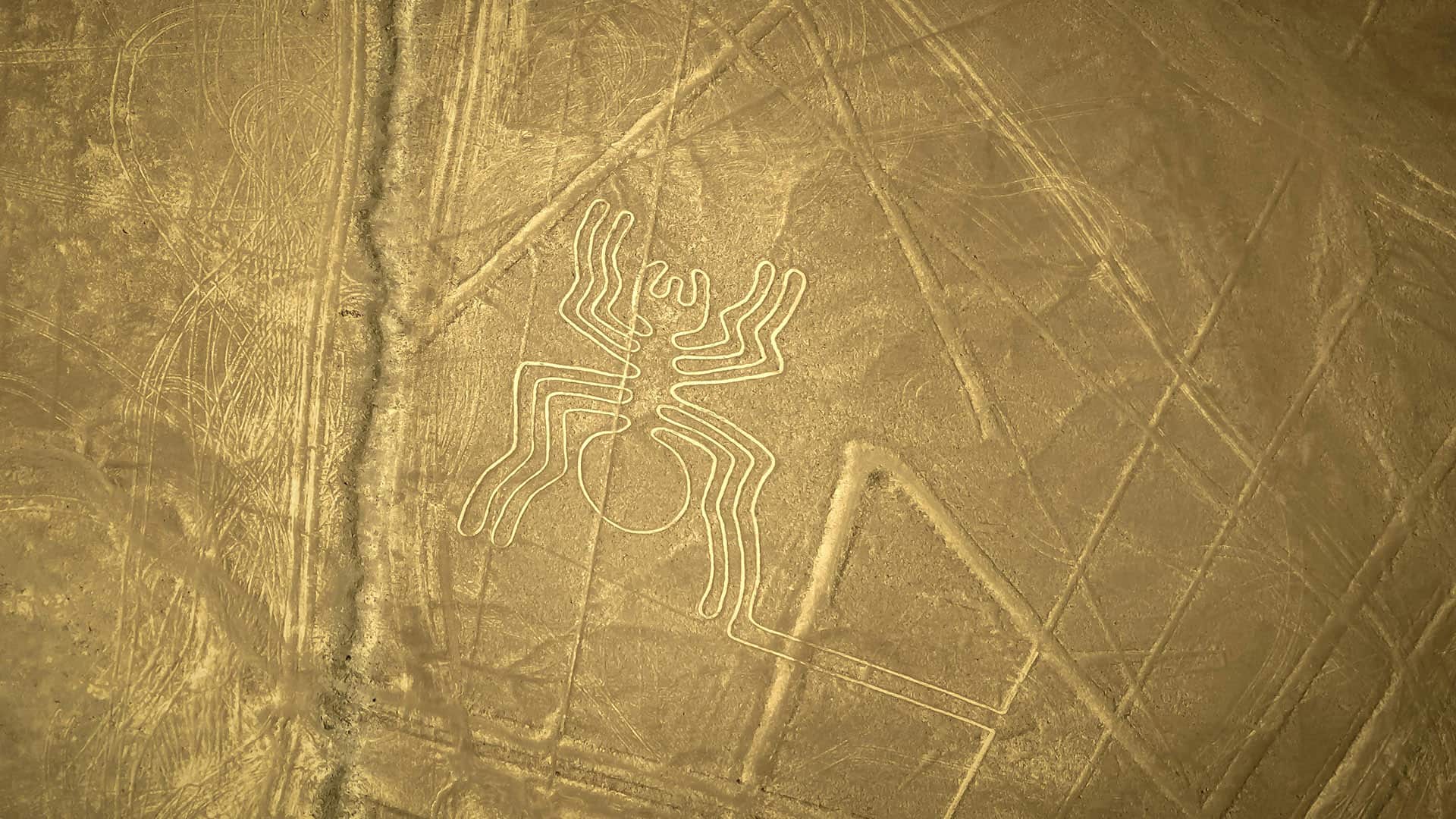
The Nazca Lines are enormous drawings etched into the desert floor of southern Peru — a hummingbird, a spider, a monkey, geometric shapes, and dozens more figures, some stretching over 200 metres across. They were created by the Nazca culture between roughly 500 BCE and 500 CE, and nobody knows exactly why. The only way to see them properly is from the air.
A Nazca lines tour is one of those experiences that most Peru visitors either do or regret skipping. This guide covers how to book a flight, what it actually costs (including the fees they don’t always mention upfront), how to get to Nazca, and whether the whole thing is worth your time and money.
The Nazca Lines are a collection of geoglyphs — large-scale designs made by removing the dark surface stones of the desert to reveal the lighter ground beneath. They cover an area of roughly 500 square kilometres in the dry Nazca Desert, about 400 km south of Lima.
The figures include animals (hummingbird, spider, monkey, condor, whale, dog), human-like shapes (the famous “astronaut”), and hundreds of straight lines and geometric patterns. Some of the animal figures are over 200 metres long. The desert conditions — almost zero rainfall, minimal wind erosion — have preserved them for over 2,000 years.
They were created by the ancient Nazca culture, a pre-Inca civilisation that inhabited this part of coastal Peru. The purpose remains debated: astronomical calendar, religious offerings visible to the gods, water-related rituals, or something else entirely. There’s no scholarly consensus, which is part of what makes them fascinating.
The site was designated a UNESCO World Heritage Site in 1994. Walking on the lines is strictly prohibited — the desert surface is fragile, and even footprints can cause damage that lasts centuries.
This is what most people do, and it’s the best way to see the lines. Small Cessna aircraft (4–12 passengers) depart from Maria Reiche Neuman Airport in Nazca and fly a circuit over the main figures. The flight lasts about 30–35 minutes. The pilot announces each geoglyph as it comes into view and banks the plane so passengers on both sides get a clear look.
You’ll typically see 12–17 figures depending on the route and operator, including the hummingbird, monkey, spider, condor, astronaut, tree, hands, and whale.
Pros: Best views, most figures covered, the only way to grasp the true scale.
Cons: Expensive relative to other Peru activities. The small aircraft and sharp banking turns can cause serious motion sickness — more on that below.
Some operators offer longer flights (70–90 minutes) departing from Pisco or Ica airports, covering both the Nazca Lines and the nearby Palpa Lines. These cost more ($280–350 per person) but save you the journey to Nazca town if you’re based in the Paracas/Ica area.
This option works well for travellers doing a Paracas, Ica, Nazca combined itinerary who don’t want to spend a night in Nazca itself. The aircraft are typically larger, and the longer flight covers more ground, though the altitude is higher, which means the figures appear smaller.
A metal observation tower stands beside the Pan-American Highway, about 20 km north of Nazca. From the top (about 13 metres high), you can see three figures: the Tree, the Hands, and the Lizard (partially). Entry costs around 3 soles.
This is drastically cheaper than a flight, but the experience is limited. You see three of the roughly 70 known figures, and the perspective is nothing like the aerial view. It’s a reasonable stop if you’re driving the Pan-American and don’t want to pay for a flight, but it’s not a substitute for one.
A natural hillside lookout near Palpa, free to access, offers views of some of the larger Palpa geoglyphs (which are older and less famous than the Nazca figures). It’s a roadside stop rather than a dedicated attraction. Worth a pause if you’re passing through, but not a reason to skip the flight.
Pricing for a Peru Nazca lines tour from the Nazca airport typically breaks down as follows:
Base flight cost: $85–150 per person, depending on the operator and season. This covers the flight, pilot narration, and usually a hotel/hostel transfer within Nazca town.
Airport tax (TUUA): 30 soles (roughly $8–10), paid in cash at the airport.
Tourist ticket: 47 soles (roughly $13–16), also paid in cash at the airport.
Total realistic cost: $105–180 per person when you add everything up.
Morning departures (7am–11am) are generally better — calmer winds, clearer visibility, and less turbulence. Afternoon flights are more prone to rough conditions.
Most operators include a transfer from your hotel in Nazca to the airport and back. Some include a visit to the Cantalloc Aqueducts (ancient underground water channels built by the Nazca culture — worth seeing, and included free with some tours) or the Maria Reiche Museum.
Booking: You can book in advance online through operators like Aeroparacas, AeroNasca, Alas Peruanas, or Movil Air. You can also book on arrival in Nazca — the town is full of tour agencies — but during high season (June–August), booking ahead is wise. Morning slots fill up first.
This needs its own section because it’s the thing most guides downplay and most travellers underestimate.
The Nazca Lines flight involves repeated sharp banking turns in a small aircraft. The pilot tilts the plane steeply to one side, circles a geoglyph, then banks the other way for the passengers on the opposite side. This happens over and over for 30 minutes.
If you are prone to motion sickness — even mildly — take medication before the flight. Dramamine (dimenhydrinate) or meclizine are widely available in Peruvian pharmacies without a prescription. Take the tablet 30–60 minutes before departure.
Even people who don’t usually get motion sick have reported feeling unwell during these flights. The combination of a small aircraft, hot desert air, fuel fumes, and constant turning is aggressive. Sitting in the front row helps slightly. Keeping your eyes on the horizon between geoglyphs also helps.
This isn’t a reason not to fly. It’s a reason to prepare properly. Take the medication, eat a light breakfast, stay hydrated, and you’ll likely be fine.
Nazca is in southern Peru, about 450 km south of Lima along the Pan-American Highway. There’s no commercial airport — you can’t fly there from Lima. Getting there is a road trip.
The most common route. Direct buses take 6–8 hours depending on the operator. Cruz del Sur and Oltursa are the most reliable companies, with comfortable semi-cama and cama (lie-flat) seats. Prices range from 40–120 soles depending on the class of service.
Buses depart from Lima’s southern terminal (often Cruz del Sur’s terminal in Javier Prado or the main bus terminal in the south of the city). Night buses are available but daytime travel lets you see the coastal desert landscape.
This is the most popular way to visit Nazca as part of a broader Peru trip. The route runs south from Lima along the coast:
Lima → Paracas (3.5 hours) — visit the Ballestas Islands and Paracas National Reserve.
Paracas to Ica (1 hour) — base yourself in Ica or Huacachina for sandboarding and dune buggies.
Ica → Nazca (2.5–3 hours) — arrive in Nazca, fly over the lines, continue south or return north.
Several bus operators (Peru Hop, Cruz del Sur) run this route with scheduled stops. It fits neatly into a 2-week Peru itinerary as a 2–3 day side trip from Lima before heading to Cusco and Machu Picchu.
Nazca is also reachable by bus from the south. Arequipa to Nazca takes about 9–10 hours. Cusco to Nazca is a very long haul (14+ hours) and most travellers fly Cusco–Lima and then bus south instead.
Some context helps before you fly. The Nazca civilisation flourished between roughly 200 BCE and 600 CE in the river valleys of southern Peru’s coastal desert. They were skilled irrigators — the Cantalloc Aqueducts are evidence of sophisticated hydraulic engineering — and produced distinctive polychrome pottery decorated with many of the same figures seen in the geoglyphs.
The lines were created by removing the reddish-brown surface pebbles to expose the lighter ground beneath. The desert’s stable climate — almost no rain, minimal wind — preserved them. German mathematician Maria Reiche spent decades studying the lines from the 1940s onwards, arguing they represented an astronomical calendar. Other theories range from ritual pathways to water cult markers.
What makes the Nazca Lines unusual isn’t their technique — it’s simple enough — but their scale. Some figures can only be recognised from several hundred metres above the ground. Why a civilisation without aircraft would create art visible only from the sky remains an open question. The flight doesn’t answer it, but seeing the figures in person makes the question feel more urgent.
Nazca town itself is small and not particularly attractive. Most travellers spend one night — arriving in the afternoon, flying in the morning, and leaving afterwards. But there are a few things worth seeing beyond the lines.
An underground water system built by the Nazca culture, with spiral-shaped access points that look like inverted funnels descending into the ground. Several are still functioning after 1,500+ years. It’s a 15-minute drive from town and usually costs around 10 soles to visit, or is included with some flight tour packages. Allow about 45 minutes.
An open-air archaeological site with mummified remains from the Nazca period, still sitting in their original burial positions. It’s about 30 km south of Nazca. Admission is around 10 soles, and most visitors combine it with a guided tour (around 50–80 soles including transport). Fascinating and slightly macabre — the mummies are well-preserved by the desert climate, with hair and clothing still intact.
A small museum dedicated to the German mathematician who devoted her life to studying and protecting the Nazca Lines. Located about 30 km from Nazca on the Pan-American Highway. Modest but interesting if you want context for what you’ve seen from the air.
An evening show (about 45 minutes) that explains the astronomical theories behind the lines, run at the Hotel Nazca Lines in town. About 20 soles. The English session usually runs at 7pm. It’s not essential, but it’s a decent way to spend an evening if you’re overnighting in Nazca.
Nazca town has a limited but adequate range of accommodation. Hotel Nazca Lines is the best-known option — a colonial-style property with a pool and the planetarium. Casa Andina Standard Nazca is a reliable mid-range chain hotel. For budget travellers, hostels along Calle Lima and around the small Plaza de Armas in Nazca offer basic rooms for 30–60 soles.
One night is all most people need. Arrive in the afternoon, settle in, see the planetarium or aqueducts, fly the next morning, and move on. The town has enough restaurants for a pleasant dinner — try the pollo a la brasa spots on the main drag for a solid, cheap meal — but it’s not a place you’d choose to linger.
This is the question everyone asks, and the honest answer is: probably yes, but manage your expectations.
The Nazca Lines are genuinely impressive from the air. The scale of the figures, the precision of the lines, and the sheer strangeness of them being there at all — drawn on a desert floor for an audience that could never see them from the ground — is remarkable. The hummingbird, the monkey, and the spider are the most striking. The geometric lines that stretch for kilometres across the plateau are equally eerie.
What it’s not is a relaxing scenic flight. It’s 30 minutes of tight turns in a small plane, often in hot conditions, with the pilot narrating over the engine noise. Photography is difficult — the windows reflect, the plane banks constantly, and the figures pass quickly. Don’t expect to recreate the crisp aerial photos you’ve seen online. Those are taken from helicopters or drones, not from a Cessna with smudged windows.
If you’re travelling through southern Peru anyway — doing the Paracas, Ica, Nazca route — then yes, it’s worth the cost and the time. If you’d have to make a significant detour to get to Nazca, weigh it against what else you could do with that time. For most travellers on a standard Peru trip, the lines are a strong addition but not the main event.
For more on how this fits into a broader Peru itinerary and the best time to visit Peru, see the linked guides.
Flight duration: 30–35 minutes (from Nazca); 70–90 minutes (from Pisco/Ica)
Total cost: $105–180 from Nazca (including all fees); $280–350 from Pisco/Ica
Best time to fly: Morning (7am–11am) for calmest conditions
Best months: May–September (driest, clearest); flights operate year-round
How to book: Online in advance through licensed operators, or at agencies in Nazca town
Time needed: One night in Nazca is sufficient for most visitors
Motion sickness: Take Dramamine 30–60 minutes before the flight
How much does a Nazca Lines flight cost? A standard 30-minute flight from Nazca airport costs $85–150 per person for the base fare. You also pay an airport tax of 30 soles and a tourist ticket of 47 soles in cash on arrival. The total realistic cost is $105–180 per person, depending on the operator and season.
Is the Nazca Lines flight safe? Yes. The flights are regulated by Peruvian aviation authorities, and licensed operators maintain their aircraft to required standards. The aircraft are small Cessnas, which makes turbulence more noticeable and the banking turns intense, but the safety record of reputable operators is good. Choose established companies like Aeroparacas, AeroNasca, or Alas Peruanas.
How do you get to Nazca from Lima? By bus. The journey takes 6–8 hours along the Pan-American Highway. Cruz del Sur and Oltursa are the most reliable operators. Many travellers combine Nazca with stops in Paracas (3.5 hours from Lima) and Ica/Huacachina (1 hour further), making a 2–3 day coastal trip before continuing south or returning to Lima.
Can you see the Nazca Lines without flying? Yes, but the experience is limited. An observation tower beside the Pan-American Highway offers views of three figures (the Tree, the Hands, and part of the Lizard) for about 3 soles. A hillside viewpoint near Palpa shows some of the older Palpa geoglyphs for free. Neither comes close to the aerial perspective.
How long do you need in Nazca? One night is enough for most visitors. Arrive in the afternoon, fly over the lines the next morning, and leave afterwards. If you want to visit the Cantalloc Aqueducts, Chauchilla Cemetery, or the Maria Reiche Museum, add a second half-day. Nazca town itself is small with limited attractions beyond the lines.